






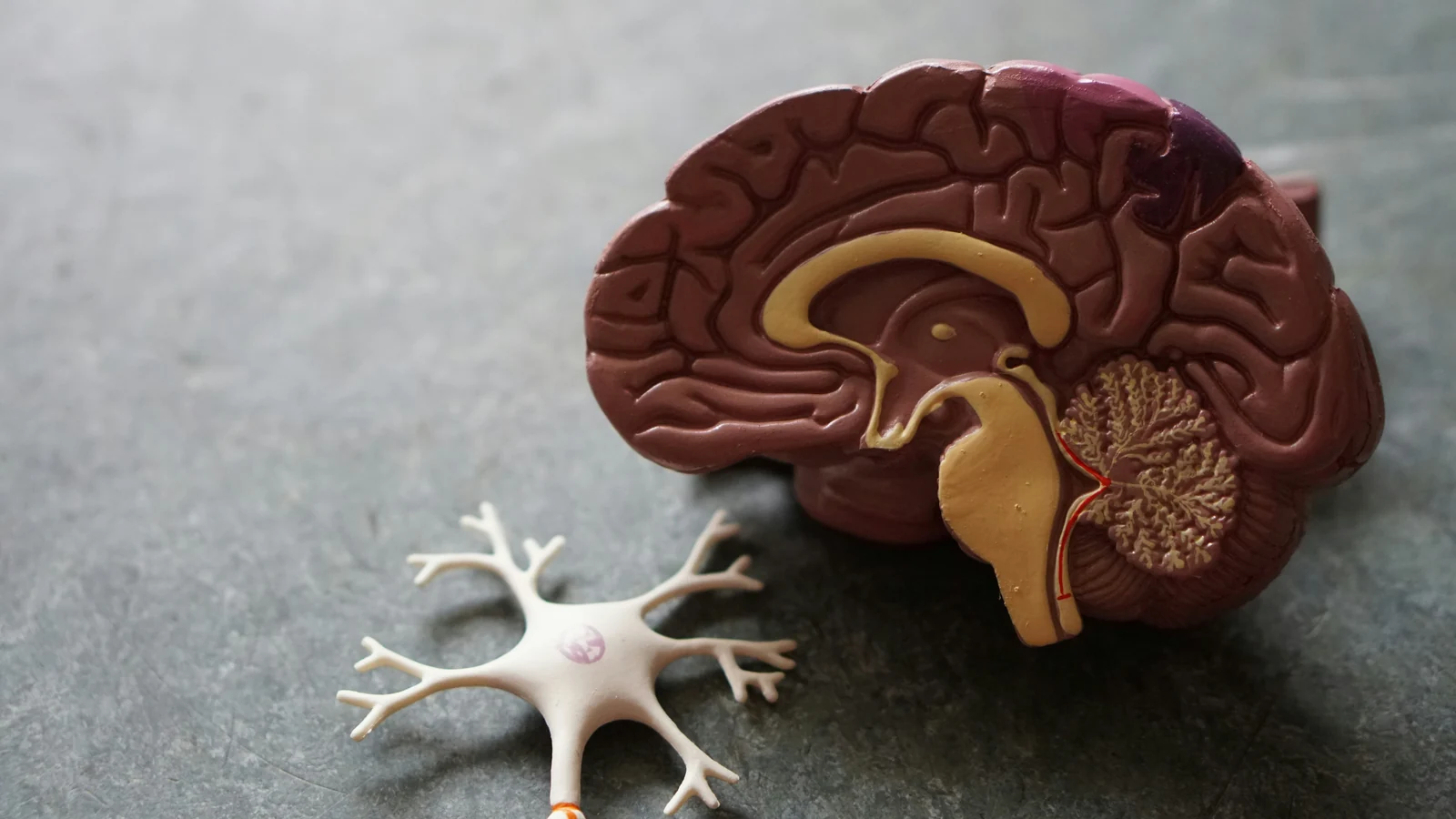
Dementia is the “umbrella term” for a large number of diseases which affect the brain, and impact thinking, daily functioning, mood and behaviour. Dementia is often considered an older persons’ disease, but it can affect younger people too. If diagnosed before the age of 65 it is known as young-onset dementia.
Each type of dementia affects the brain differently. The person you are supporting may have difficulties with memory, other thinking abilities, sensory abilities (e.g. difficultly seeing an object against a similar coloured background, judging depth) and experience changes coping with daily activities. They may also experience behavioural or personality changes. These changes can be challenging, and receiving a young-onset dementia diagnosis can be a shock, as it is relatively rare (about 6-10% of all dementias).
Dementia in younger people often looks quite different from the forgetfulness that we usually associate with dementia at older ages. Early signs may include mood or behaviour change, and diagnosis can be difficult, even for experienced doctors. Some people may be initially incorrectly diagnosed with a mental health condition. If you’re worried that your loved one may have dementia, see the Facing Dementia Together website for more information. This video explains the range of symptoms younger people may experience and how they may show up in day-to-day life. (You may need to scroll down the page a little to see the video).
In some families, certain types of young-onset dementia have a genetic link. If you’re concerned about inherited risk, see Section 1.12, Your children’s risk of dementia for more details.
Common types of dementia in younger people include:
- Alzheimer’s disease
- Lewy body dementia
- Frontotemporal dementia
Alzheimer’s disease
Alzheimer’s disease is the most common type of dementia across all age groups. People living with Alzheimer’s disease typically have deterioration in the areas of their brain involved in memory (called the hippocampus and temporal lobes), as well as more general changes throughout the brain. Short-term memory (memory of recent events) is affected more than long-term memory. People living with Alzheimer’s disease may find it harder to concentrate, solve complex problems, or they may find themselves thinking more slowly.
Alzheimer’s doesn’t always start with memory problems, and this is especially true for people under 65 years. About 1 in 20 people living with Alzheimer’s disease experience less common subtypes of dementia that have different early symptoms. These include:
- Logopenic aphasia is a subtype that mainly affects language. A person may have trouble finding the right words, resulting in frequent pauses in speech and errors in speech (such as substituting or leaving out sounds). They may also say fewer words overall and struggle to repeat sentences.
- Posterior cortical atrophy is a subtype that often begins with subtle problems with vision or sight. It’s sometimes mistaken for an eye problem rather than a brain-related one. People may find it harder to recognise faces or objects, judge depth and distance, or navigate spaces because of poor spatial awareness.
- Frontal variant is a subtype that mainly affects behaviour and higher-level thinking skills, like planning, organising, and decision-making. A person may act in ways that seem out of character, similar to symptoms seen in behavioural-variant fronto-temporal dementia (described below).
Read more about Alzheimer’s disease at Dementia Australia.
Lewy body dementia
People living with Lewy body dementia have trouble with their concentration and attention, and their movement. They may have visual hallucinations, which is seeing things that are not there, or delusions, which is believing things that are not true. Hallucinations and delusions are very real to the person living with Lewy body dementia. Their concentration and attention can fluctuate so that the person can be really clear in the morning but muddled and confused later that same day. Movement changes may include developing a slow or stiff way of walking. People living with Lewy body dementia can benefit from physiotherapy and exercise physiology to help improve movement.
Lewy body dementia and Parkinson’s disease are related diseases, however in Lewy body dementia the difficulties with thinking are more prominent first, whereas in Parkinson’s disease the difficulties in movement are more prominent.
Read more about Lewy body dementia at the Lewy Body Dementia Association website and Dementia Australia. This video describes Lewy Body from the perspective of two couples experiencing it.
Fronto-temporal dementia
People living with fronto-temporal dementia have damage in the frontal and temporal lobes (or regions) of their brains. People living with frontotemporal dementia often have different symptoms to other dementias. For this reason, some clinicians might not believe that they have dementia or don’t understand how to support their type of dementia. People living with fronto-temporal dementia and carers often have to educate others (including health professionals) about fronto-temporal dementia.
There are three sub-types of fronto-temporal dementia, each with a different pattern of symptoms:
- Semantic dementia is a subtype where the person starts to lose the meanings of words. People with semantic dementia have trouble expressing themselves with words, understanding language, reading and writing. They may benefit from speech pathology to improve communication (see 3.11 Use therapies to help people maintain their independence).. Brain changes start in the temporal lobe in semantic dementia.
- Progressive non-fluent aphasia is a subtype where the person has difficulty speaking fluently. People with progressive non-fluent aphasia have trouble expressing themselves and following conversations. They may benefit from speech pathology to improve communication (see 3.11 Use therapies to help people maintain their independence). Brain changes start in the temporal lobe in progressive non-fluent aphasia dementia.
- Behavioural-variant frontal dementia is a subtype where the person’s behaviour, mood or personality changes. People living with behavioural-variant frontal dementia may become more apathetic, socially disinhibited or socially unaware. They often have trouble with judgement, decision making or problem solving. They might develop new behavioural habits that they do repeatedly, including eating and drinking different foods or drinks.
Read more about fronto-temporal dementia at The Association for Frontotemporal Degeneration and Dementia Australia. The Sydney University Frontier Clinic specialises in fronto-temporal Dementia.
Here are some international websites that provide information on young-onset dementias if you’d like to learn more:
- Rare Dementia Support website provides tailored information and guidance for rarer types of dementia, including those which occur at a younger age.
- The UK Alzheimer’s Dementia site also has information on the different types of young-onset dementia.
Understanding more
Sometimes health professionals will refer to parts of the brain that are affected in dementia. The brain is incredibly complex, and dementia may affect one part of the brain more than others. You can learn what the different parts of the brain do by going to the interactive website Brainline. You can click on different parts of a diagram of the brain and learn what that part is responsible for and problems that may occur if that part is damaged.
This website provides sections to help you come to terms with and manage changes that dementia brings. Continue reading, use the search function to find topics of interest, or return to the Young-Onset main page to select topics that you need now.
Photo: Robina Weermeijer via Unsplash.