





My mother, Christine, was a lecturer in academic skills. She was diagnosed with young-onset dementia during my first year at university. Our relationship changed dramatically as I became her guardian and primary carer.
In the first few months transitioning into a carer, it was easy to get caught up in the logistics of this new dynamic, focusing on what my mum needed me to do for her. As time went on I had to stop and remind myself that we were still mother and daughter. I would pause before entering her room and make a conscious choice to just be a 20-year-old girl. I spoke to mum about my uni assignments, and if I was going out on dates. I hated to think that by always focusing about the logistics of care, I was denying her the last few years of being a mother.
Mum’s speech was severely impacted by her dementia, which of course made communication difficult. Sometimes I wasn’t sure how much she would understand or remember. On one occasion, I let her know I wouldn’t be visiting for two weeks as my exam period was about to commence. The next time I saw her she ran over to me, as if she was about to ask me a question. I didn’t need to be asked. I told her my semester was finished and I was happy with my exam performance. Although she couldn’t form the words, her face told me everything I needed to know.
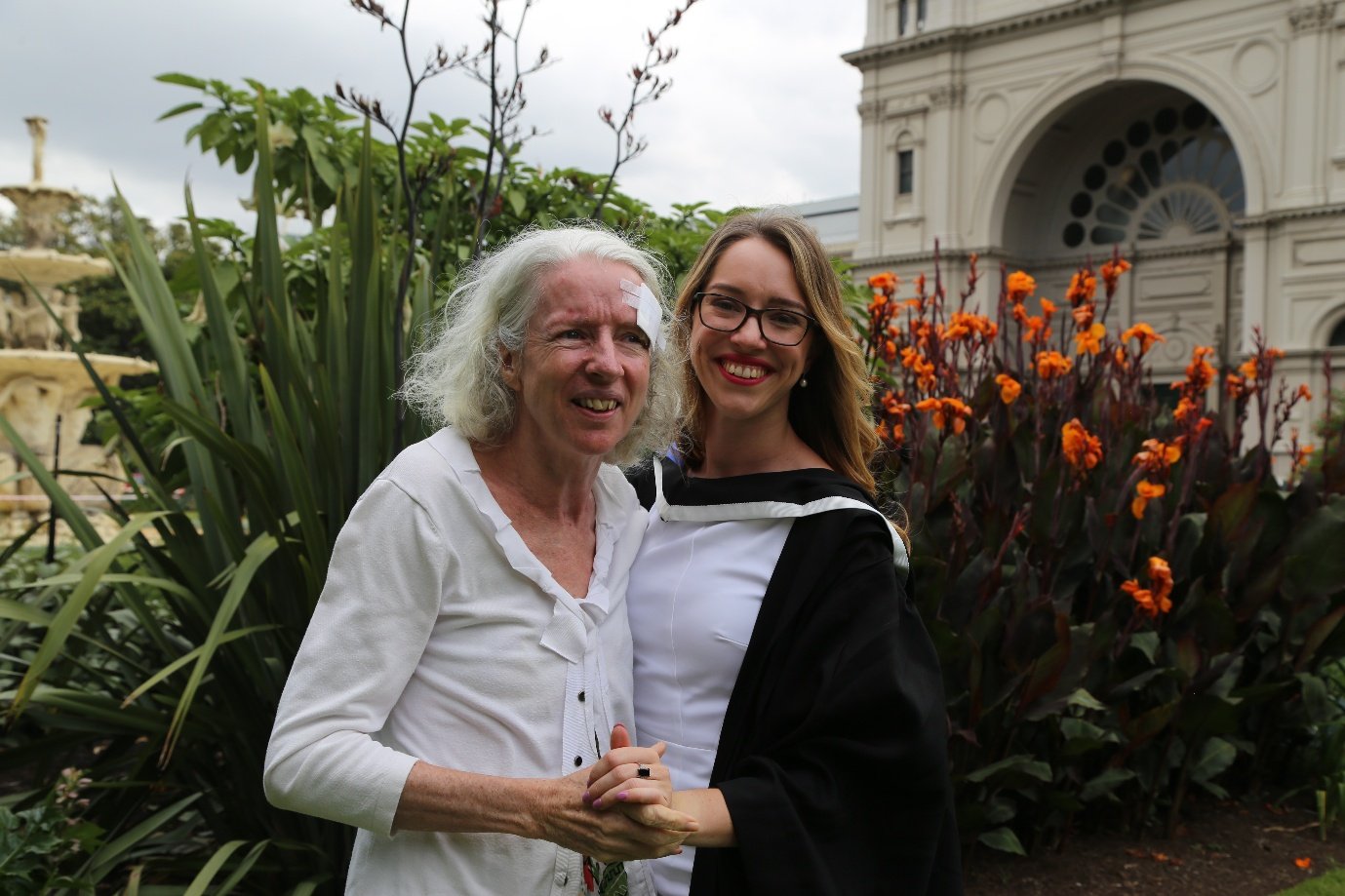
This was a huge lesson for me. That despite her diagnosis, I could always connect to the person she was and continued to be. This culminated in mum’s attendance at my university graduation a few years later. Again, I didn’t let logistics (or a huge bandage) get in the way of a good time.
It has now been more than 6 years since she passed. I’m still a student, and I long for her expertise in academic writing as I draft documents for my PhD thesis, but I’ve found other ways to honour our bond as mother and daughter.
For more information
For people with young-onset dementia and carers: