






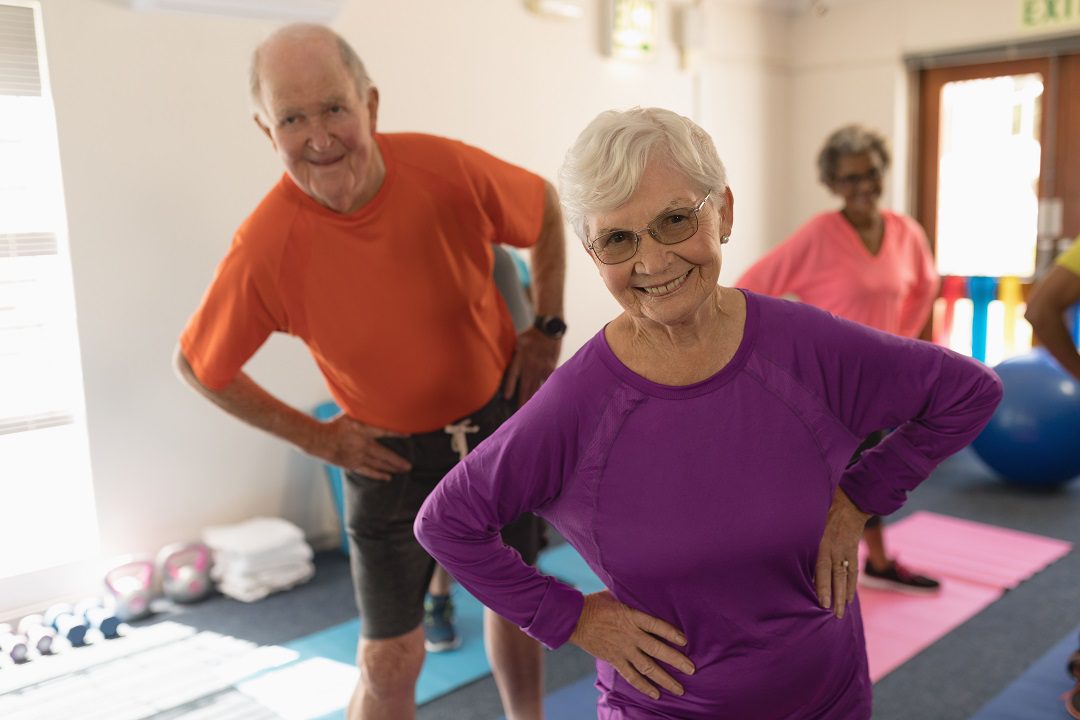
Regular physical activity is one of the best things you can do for your brain and body. Staying active can reduce stress, improve wellbeing, and help keep up with the demands of caring. The key is finding activities you enjoy and making them part of everyday life.
Exercise comes in different forms, and each has unique benefits.
Aerobic exercise
When people think about exercise, they often think of aerobic exercise. These are ‘moderate fitness’ exercises which raise your heart rate and get you breathing more rapidly. They are designed for a healthy heart. Brisk walking, jogging, swimming and cycling are examples. You can turn vacuuming, sweeping or raking into aerobic exercise too! Aerobic exercise has been shown to improve your mood, sleep and general physical health.
Strength training
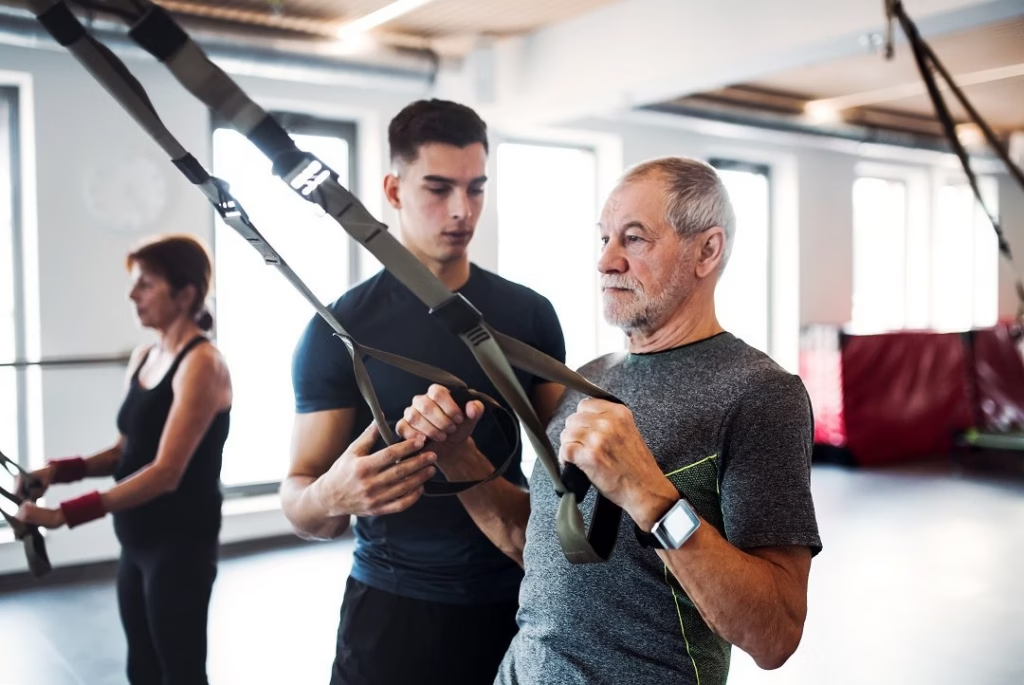
Strength or resistance training are exercises with weights, pulleys, exercise bands or even using your own bodyweight to provide resistance to work against. These exercises strengthen specific muscles and improve the density (or ‘hardness’) of your bones to reduce risk of injuries such as fractures. Strength training can also be incorporated into daily activity such as carrying the laundry basket rather than using a trolley, getting up from a chair without using your arms or climbing stairs.
If you haven’t done strength training before, a physiotherapist, exercise physiologist or personal trainer can assess your current abilities and develop a program suitable for you. You may have to pay privately for these services, and the best way to find someone suitable is to ask for a recommendation from your doctor, other health professional or friends. Seniors exercise classes usually include strength training.
Flexibility
Maintaining flexibility as we age is important. An exercise program needs to include moving joints and stretching muscles to help us move easily and avoid injury. Exercises such as yoga, tai chi, dancing or bowls can help maintain flexibility.
Balance
We don’t tend to think much about balance exercises, but the ability to balance or recover when we are thrown ‘off balance’ reduces with age. Poorer balance means we are at a greater risk of falls and injury. Poor balance reduces our confidence in moving around in everyday life.
Balance exercises involve safely challenging your ability to balance with sideways walking, heel raises and (safely) practicing finding your ‘toppling point’ – the point just before you lose your balance and increase the time you can hold this pose. Balance and strength go hand in hand. You need to work on them both. The good news is research has shown that even very old and frail people will improve quickly with regular practice.
Falls prevention
‘An ounce of prevention is worth a pound of cure’.
For falls, the best treatment is prevention, and exercise is the best prevention. People with dementia fall more often than people of the same age without dementia, so exercising together with the person you support can be fun and reduce their (and your) risk of falls.
Falls prevention programs usually incorporate strength, balance and flexibility exercises. Often falls prevention programs will also suggest changes you can make around your home to reduce your risk of falls. These websites can help you find a local falls prevention or exercise program:
- New South Wales: Active and Healthy
- Queensland: Stay on your feet
- Victoria: Victorian falls directory
- Australian Capital Territory: Falls and Falls Injury Prevention Program
- South Australia: Falls South Australia
- Tasmania: Stay on your feet
- Western Australia: Stay on your feet
- Northern Territory: Darwin and Palmerston falls prevention
As well, your GP or GP practice nurse may know of falls prevention classes in your area.
Frequently asked questions about exercise
How much exercise should I do?
Australian physical activity guidelines recommend that adults 65 years or over should do at least 30 minutes of moderate intensity physical activity on most, preferably all, days of the week. Moderate intensity physical activity means you’re exercising hard enough to raise your heart rate and start to perspire.
What if I don’t exercise regularly?
- If you don’t exercise regularly, talk with your GP about starting exercising. Your GP may suggest consulting a physiotherapist or an exercise physiologist for a program, especially if you have existing health conditions.
- If you are just starting out, work up to the recommended 30 minutes gradually. For example, if you can’t do 30 minutes walking, start with a time you can realistically achieve, say 5 or 10 minutes once or twice a day. After 2 weeks or once you start feeling comfortable, increase the time by 5 or 10 minutes. As your fitness improves, start to add in steps, rises or small hills.
How do I incorporate exercise into my daily life?
Starting exercise doesn’t necessarily mean going to a gym! You can incorporate a few exercises into everyday activities. This example gives you simple exercises for strength, balance an flexibility while waiting for the kettle to boil and watching TV! Associating an exercise with another activity you do every day means you will remember to do them. A physiotherapist or occupational therapist can suggest ways to incorporate exercise into your usual daily activities.
Exercise can be a time you set aside just for you, or it can be a time to socialise with friends or neighbours. Many councils have exercise groups specifically designed for older people and The Heart Foundation has an Australia-wide program of walking groups you can join.
Many local councils run exercise groups for seniors. Contact your local council to see what is available.
Don’t underestimate the value of short bursts of exercise several times a day. You can read about ‘exercise snacking’ here.
Always talk to your doctor before starting to exercise, especially if you have other health conditions. Ask for advice about what’s safe for you to do. If you feel faint, dizzy or experience pain, stop and talk to your doctor.
Exercise every day
- Do at least 30 minutes of moderate intensity physical activity on most, preferably all, days.
- Exercise hard enough to raise your heart rate and break a sweat.
- If you find 30 minutes difficult right now, start with just 10 minutes once or twice a day. After 2 weeks, increase to 15 minutes twice a day.
- Over the course of the week, try to incorporate different types of activities.
- If you prefer not to exercise on your own, join an exercise group or find an exercise buddy.