






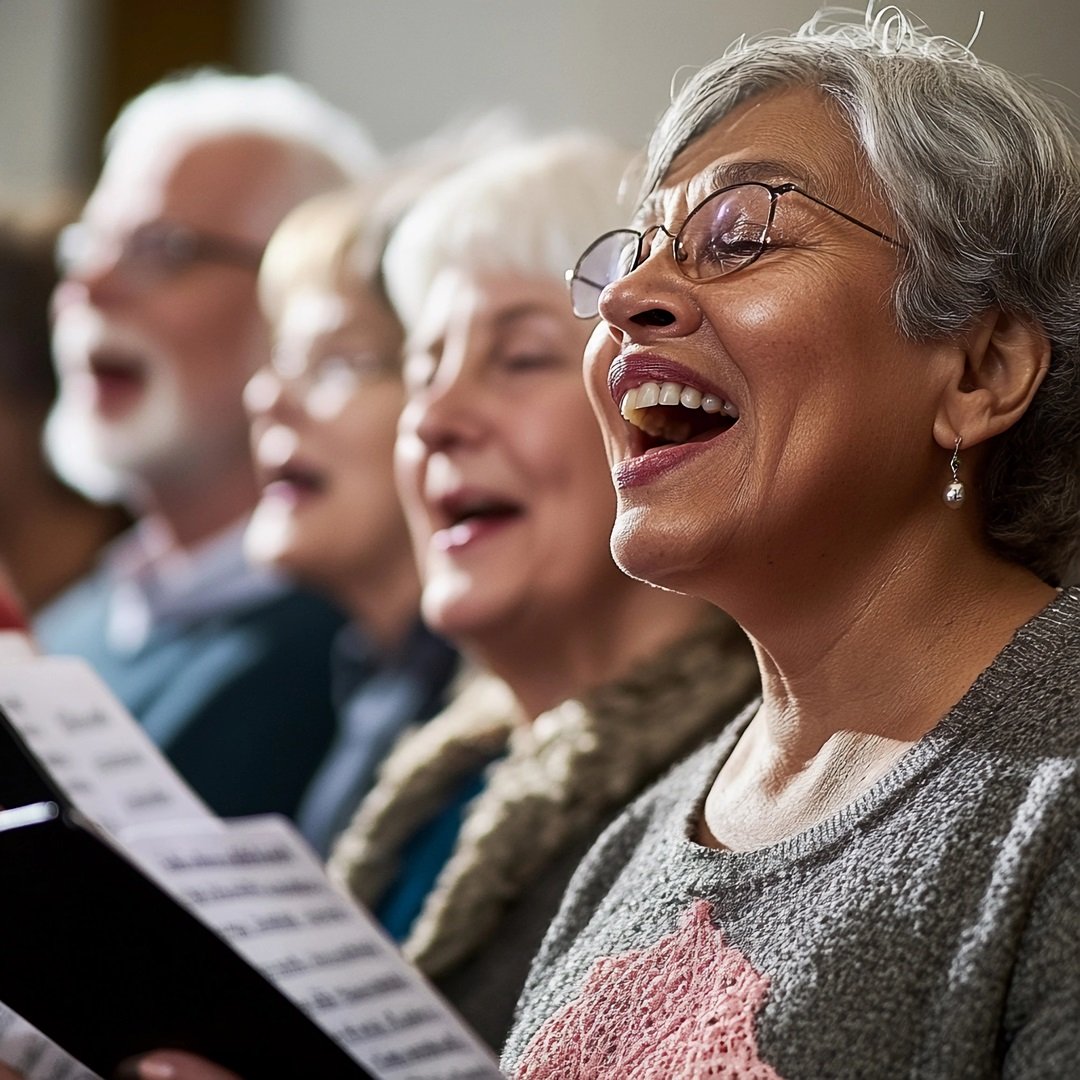
A recent study in Canada, reported in the Journal of Ageing Studies, found that many people with dementia retain the ability to sing in a choir despite cognitive loss. The researchers found that being part of a choir encouraged social relationships and increased social engagement. The choir provided a sense of meaning and purpose for those involved, as well as an opportunity for creative self-expression. It also helped to increase community awareness about people living with dementia and reduce dementia stigma.
Benefits of singing and being part of a choir
There are many ways that music and singing can help people living with dementia or mild cognitive impairment, as well as carers.
Memory stimulation and cognitive engagement: Music, especially familiar songs, triggers memories and helps to stimulate cognitive function. Learning new songs or following along with music engages the brain, promoting mental agility and concentration. Even when verbal communication is challenging, musical memory may remain intact for longer. For more information, read the article on Music and dementia.
Emotional well-being: Singing releases endorphins and reduces stress, helping to alleviate anxiety, depression, and agitation, which is common for people living with dementia, carers and older adults in general. For more information, read the article on Older Adult Mental Health Week.
Social connection: Choirs provide a sense of community and belonging, reducing feelings of isolation and loneliness. The social interaction involved can improve mood and overall quality of life. For more information, read the article on Social inclusion for people living with dementia.
Non-verbal communication: Music allows for expression beyond words, offering a way to communicate emotions and connect with others.
Physical benefits: Singing improves breathing, posture, and promotes relaxation.
Stigma reduction: Many community-based choirs are inclusive of people living with dementia, carers, friends and family, fostering a safe and respectful environment. For other community members in the choir, or even an audience at a choral concert, seeing, meeting and talking with people living with dementia and their carers develops a better understanding about dementia. Having contact with people living with dementia helps to reduce fear and many of the negative stereotypes, such as people with dementia having aggressive behaviour or being unable to contribute.
Joining a choir
The Australian National Choral Association has listing of many choirs throughout Australia. Many are non-audition, no experience necessary community choirs. Visit the ANCA and search the map and listing in your area.
Local councils often have information about choirs within their Local Government Area.
For information about joining a dementia-friendly choir, visit the Dementia Australia Dementia-Friendly Communities website and search on your location and keywords such as “choir” or “sing”.
For information about establishing a dementia-friendly choir try these Australian resources: